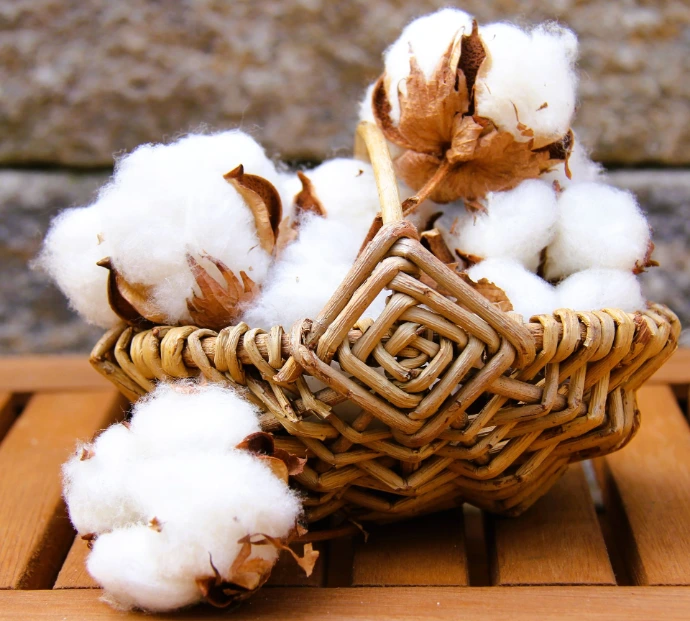
The History of Cotton
Tracing the Journey of a Transformative Fiber
Introduction
Cotton is one of the world's oldest and most important natural fibers, with a history that has intertwined with human civilization for thousands of years. Its journey from wild plant to a cornerstone of global industry reflects remarkable advances in agriculture, commerce, and technology.
Early Origins
The use of cotton dates back to prehistoric times. Archaeological evidence suggests that people in the Indus Valley (modern-day Pakistan and northwest India) were spinning and weaving cotton as early as 5,000 BCE. Around the same period, evidence of cotton textiles has been found in ancient Peru and Mexico, indicating that the cultivation and use of cotton developed independently in the Old and New Worlds.

Cotton in Ancient Civilizations
In India, cotton held significant economic and cultural importance. The ancient Greeks encountered cotton during their interactions with the Persians and Indians, describing it as a fabric made from "trees that grew wool." In Egypt, cotton was grown and woven into cloth, though linen remained the dominant textile.
In the Americas, indigenous peoples of Peru, Mexico, and what is now the southwestern United States cultivated and used cotton for clothing and other textiles long before the arrival of Europeans.
The Spread of Cotton
Cotton gradually spread to other regions, including China, the Mediterranean, and Africa. By the Middle Ages, cotton textiles were widely traded across the Islamic world and Europe. The expansion of trade routes, such as the Silk Road, facilitated the movement of cotton goods and knowledge about cotton cultivation and processing.
The Industrial Revolution and Cotton
The 18th and 19th centuries marked a revolution in the cotton industry, particularly in Britain and the United States. The invention of the spinning jenny, the water frame, and the power loom enabled the mass production of cotton textiles. Eli Whitney's cotton gin (1793) greatly increased the efficiency of separating cotton fibers from seeds, making cotton cultivation more profitable in the American South.
Cotton became a driving force of the Industrial Revolution, fueling the growth of textile mills and urban centers. However, the demand for cotton also had deep social and economic consequences, particularly in the United States, where it was closely tied to the expansion of slavery.
Modern Era
Today, cotton remains a vital crop, grown in more than 80 countries around the world. Advances in agricultural science, such as the development of pest-resistant and drought-tolerant varieties, have made cotton production more efficient and sustainable. The fiber is not only used for clothing but also for a wide range of products, from medical supplies to industrial materials.
Conclusion
The history of cotton is a story of innovation, adaptation, and profound impact on societies worldwide. From its ancient origins to its modern global presence, cotton has shaped economies, cultures, and the everyday lives of people on every continent.